You're given a real business crisis. Build a multi-agent system that addresses it — then ideate and design your own product that puts the solution in the hands of someone who needs it. The crisis is the prompt. The product is yours.
Built with
M-AGENTS is a single-day build sprint. You receive a real business crisis — corrupted data or undetected fraud — and four hours to ship a working multi-agent pipeline. Then you turn that pipeline into a product your end user can actually operate. Judging happens live, science-fair style.
You define the product, the user, and the success condition in your Product Brief. The track is the problem space — not the spec.
A manufacturer's data is corrupted four days before a regulatory audit — duplicates, unit conflicts, numbers that contradict each other. Build any product that helps an organization find, fix, and explain broken data.
End user archetype: the compliance officer who has never opened a database.
A fraud ring stayed under every alert threshold — small transactions, circular flows, coordinated accounts. Build any product that helps a fraud team see what rules miss.
End user archetype: the analyst with three minutes per case.
Makes the agents run, wires Cognee, connects agent outputs to the product interface.
Owns the Product Brief and everything the user sees. Step 0 and Step 5 are yours.
Validates outputs, writes the Agent 4 narrative, and runs Geodo research on real-world entities.
Owns the demo script, the Trupeer recording, and the finalist stage presentation.
One page before any code. Who's it for, what does it do (one sentence), what does success look like, what won't you build.
Reads the dataset. Finds what's wrong — duplicates, anomalies, suspicious patterns.
Sorts the findings. Worst first, with reasons for every ranking decision.
Takes action on each finding. Every action has a logged reason — "the model said so" fails judging.
Produces a narrative a human can read and sign. Downloadable from the product. Domain Expert owns this step.
Build the product from Step 0. Demo it as your end user — not as an engineer explaining code.
Memory connects everything — each agent recalls the previous one's work through Cognee.
Mandatory tools are required for a valid submission. Recommended and optional tools are there when you need them.
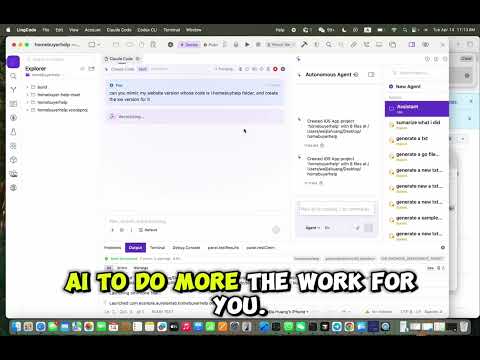
Design and customize your agents. Claude Code, Codex, and Gemini CLI built in. Web, CLI, or native Mac.
Memory layer between all four agents. 14-day Cloud trial. Top prize: $200/mo credits. 2nd & 3rd: $35/mo credits.
Your 5-minute demo video. Required submission. 14-day trial included for all participants.
Domain Expert researches your product's real-world entities — customers, companies, market. Web platform, no code. 100 credits + 5-day Pro included.
Both track datasets. Optional — but using the benchmark earns bonus credibility: judges verify your findings against a hidden answer key.
15,420+ validated agent skills. Chat with it to discover what's possible before writing your brief.
Two registrations — Devpost for your submission, the form so prizes reach the right team.
Ran on real data. Outputs aren't hardcoded.
Agent N+1 demonstrably used what Agent N found, via Cognee.
Judged against YOUR OWN Step 0 success condition.
A judge operates the product cold during the science fair.
Every decision has a visible reason a human can follow.
Minimum 15 points to qualify for finalist consideration. In-person judges walk the science fair 4–5 PM. Virtual judges review Devpost from 5 PM. Three finalists demo live.
Yes. Designer, Domain Expert, and Presenter are core roles — not support. Steps 0, 4, and 5 and all Geodo research belong to non-technical teammates. A team with one Builder and three sharp non-technical people can win.
No — both live on Kaggle and they're optional. Bring your own data if you prefer. Using the benchmark earns bonus verification: judges check your findings against a hidden answer key for extra credibility points.
Yes — bring your own key for OpenAI, Anthropic, or Groq. Groq has a free tier with no card required. No API keys are provided at the event.
Your Devpost entry must include: Product Brief PDF, GitHub repo link, Trupeer video URL, track selection, and a written description of your product. All items required — partial submissions are not accepted.
Science-fair scores (4–5 PM, in-person judges) plus submission review on Devpost (virtual judges, from 5 PM) → the top 3 teams demo live at 5:25 PM. Minimum 15 of 25 points to qualify.